Showing posts with label reading. Show all posts

Monday, August 3, 2015

Keeping Track of Reading Conferences


Hi all!  I just wanted to pop on to share how I keep track of my reading conferences.  I use a really simple form which you can download at the bottom of this post!


I write the student's names in different colors to indicate their reading levels.  Red pen is for students who need frequent reading conferences.  {Truthfully, you can have a higher level reader who still needs frequent conferences but that's another post!} Yellow/orange pen is for students who are approaching grade level expectations.  Green pen is for students who are reading at or above their grade level.

My struggling readers need the most support, so I try to make sure to check in with them every few school days.  I particularly like to check in on Mondays to make sure they have been reading over the weekend and that they have the books they need for that day.

Ideally, I try to confer with every reader once every 10 school days.  The dates that are circled in red above are when it was longer than 10 days since our last conference.  Since I don't like seeing those red circles, it keeps me on track with who I need to see and when.


It's a simple form, but it works!  You can grab the PDF HERE and the editable PowerPoint HERE.


I try not to over plan my conferences.  I know some teachers really thrive on schedules, but I like to indicate a reader or two who I plan to confer with in my plan book and then leave myself some flexibility with conferring with other readers.  The more conferences you have, the more likely it will be that a reader will request a conference with you.  This is how you know your conferences are on the right track!  When readers find them to be helpful and valuable, they will ask for your assistance!

Don't forget that today and tomorrow are the back to school sale at TpT!  My entire store is on sale, including the bundles!  Don't forget to use code BTS15 at checkout to save an additional 10% off.


Wednesday, July 8, 2015

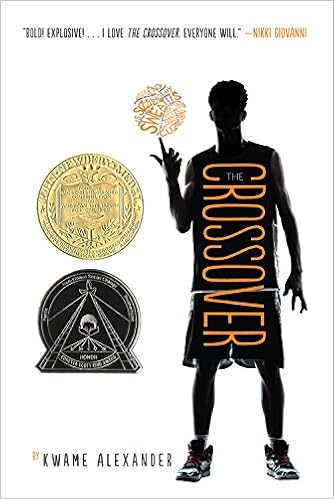
The Crossover


Let's all just pretend that I've been updating my blog regularly and it hasn't been sitting, getting dusty in some corner of the Internet, okay? :-)

An apology: new evaluation system in NYC nonsense/first grader involved in too many activities/dissertation length lesson plans/marathon training/death of my doggie/adoption of a puppy/maintaining a marriage = something had to give.  And now that it's summer I hope I'll be able to blog more regularly (although my soon-to-be second grader is still involved in too many activities!).


I did, however, have time to read the best book I've read in years.  The Crossover by Kwame Alexander won the Newbery Award this year and it is fabulous.  The book is written in free verse and in the vernacular of today's kids.  When I read the book aloud to my class at the end of the year, one of my students kept remarking that she could tell the book was "modern" because of the way it was written (love that!).

The story is narrated by Josh, aka Filthy McNasty, an African American boy who loves LOVES basketball and is great at it.  He is the only seventh grader on his team who can dunk.  His father played professional ball for a European team and won a championship ring before he was sidelined by an injury.  Josh is also a twin.  His twin brother Jordan, or JB, also plays basketball, but develops a new interest in girls, leaving Josh feeling alone.  The text brings you through the changes that Josh unwillingly experiences because of the choices of people around him.

My students loved this book.  I had so much fun reading it aloud to them.  It's filled with basketball trash talk and rhymes (See, when I play ball,/ I'm on fire./When I shoot,/I inspire./The hoop's for sale,/and I'm the buyer.)

Entwined into the story, the author wove several vocabulary words that have their own chapters and Basketball Rules, which are really rules for life.  My favorite rule is #3: "Never let anyone lower your goals.  Others' expectations of you are determined by their limitations of life.  The sky is your limit, sons.  Always shoot for the sun and you will shine."

While this is a text that refers to basketball (A LOT) I don't think it just appeals to kids who are interested in sports stories.  This is a highly engaging text that will appeal to many readers in your classrooms.  I especially think that this is a book for your most reluctant readers.  Kids who are entering their tween and teen years will relate to the drama of young love and the chapters are short and easy to digest.  Pertinent vocabulary is explicitly defined within the text as well.

I'm currently planning a novel study for my fifth graders next year using this text.  I've posted a comprehension booklet on TpT:


 This packet includes 22 pages of higher order thinking questions, a project choice board and a full answer key with teaching ideas for the teacher! I've also included a CCSS anchor standard alignment, which you can see in the preview.  As always, this resource is posted at a discount from today until 7/10 around 9pm.

I also wanted to share a free resource: a vocabulary trifold for The Crossover.  You can use this download to help students define the vocabulary from the text or to write sentences using the words they've acquired.  Click on either image to download from Google Drive:


Tell Me: Has anyone else read The Crossover? The next book on my list is Brown Girl Dreaming by Jaqueline Woodson.  I have quite a few books for older readers, but I need more current books for third and fourth graders.  Any suggestions?

Thursday, August 1, 2013

Thursday Throwdown: Making Learning More Interactive


Today I'm linking up with I'm Lovin Lit for Thursday Throwdown!   The topic: making student learning more interactive.  As soon as I heard this, I thought about my favorite school supply: Post It Notes!

Who doesn't love sticky notes?  My students loved anything involving sticky notes and I hope that my next group loves them too.  I make sure to buy bright colors and interesting patterns to keep them new and fresh.  Of course we use stickies when we read and we respond....
My apologies for the recycled picture!

We also used sticky notes for graphic organizers as we read Out of My Mind by Sharon Draper.  
I made a few graphic organizers for the beginning of the book to keep up their motivation in the early days of June.

This is a blank version of the handout.  {Yes, we were still working on predicting in June.}  In the first box, I copied an image of the cover of the text.  Under the box, I asked the kids to think about the title and the image of the fish jumping out of the bowl.  In the second box, I copied the blurb from the back of the text and underneath, I asked them to write any questions they have about the description.  In the final box, the students made predictions about the text after hearing the first chapter.  The lesson?  Our predictions about text should evolve as we gather new information about the characters and the plot.

Here are two examples of student work from that morning:
This student asked questions about the cover, the character and the phrase "having a voice."
This sample is from my superstar.  I'm going to OMG miss him next year.  He wrote "is it a real voice or a metaphoric voice?"  Seriously?  LOVED this kid.

The sticky mats were a great launching point for discussion about the visuals and our ideas about the text.  The students had a few minutes to gather their thoughts before discussion and using the sticky mats was something *different* so they were more engaged than if I asked them to think-pair-share or jot their ideas in their notebook.  There's just something magical about sticky notes!

For next year's group, I created a set of editable Common Core Aligned graphic organizers that I'm calling sticky mats.


 These are generic prompts that can be used with most literature.  Common Core Standards and prompts are a little tricky because they are very text dependent, so your students may need some additional prompting in order to really dig deep into their books with these organizers. They are not meant for independent reading unless you've done a lot of work with the standards.  You can check them out HERE.  This is an editable product.  You'll be able to change the wording of the prompts to make them more text dependent.  You'll need powerpoint in order to edit the file.  I've also included links to the (free) fonts I used.

So how do you make learning more interactive for your students?  Be sure to link up!

Wednesday, May 1, 2013

Workshop Wednesday: Favorite Reading Group Book

I'm linking up with Ideas by Jivey for Workshop Wednesday!  This week's topic: favorite reading group book.

My favorite reading group book is Tuck Everlasting, by Natalie Babbitt.  If you've never read it, it's the story of a girl named Winnie who stumbles upon a boy and a spring in her woods.  She is kidnapped by the boy, his brother and their mother who try to convince Winnie that the spring has the power to stop time for who ever drinks it.  The family tells her that they stopped aging eighty years ago when they drank the water and they need her to help them keep their secret.


I read this book for the first time when I was in sixth grade.  I remember loving the scene with Winnie sitting in the row boat with Angus Tuck as he tried to explain to her why he wishes he could get back on the wheel of life, even if it means his eventual death.
Everything's a wheel, turning and turning, never stopping. The frogs is part of it, and the bugs, and the fish, and the wood thush, too. And people. But never the same ones. Always coming in new, always growing and changing, and always moving on. That's the way it's suppose to be. That's the way it is. If we didn't move it out ourself, it would stay here forever, trying to get loose, but stuck. That's what us Tucks are, Winnie.
I've shared this book with classes as a read aloud for many years, but this was the first year I decided to read it with a reading group.  For read aloud, it prompted great discussion and debate amongst the class about immortality and what we wanted Winnie to do.  I think I really preferred this book as a reading group book because I got to see how my students changed their opinions over time as they read.  When you hear 20 something opinions, it's very hard to keep individual opinions straight, but when you are reading with just 5 students, it's much easier to remember how each student feels and how their opinions change.
 Prereading homework
As a reading group book, it also gives students the space to mull over Winnie's feelings for Jesse.  For many of my students, especially those that read far below their grade level, it's the first time they've encountered a hint of romance in their books!

The book is so rich and so beautifully written that the movie version is just such a disappointment. I let my students watch it, although there is a little bit of kissing in it, but it's just not good movie!  It doesn't do the story justice and there are extra parts added in for no good reason.

Glencoe offers a great (and FREE!) study guide for the book.  Click here for the pdf.

What is your favorite reading group book? Be sure to link up with Ideas by Jivey to share!

Sunday, April 7, 2013

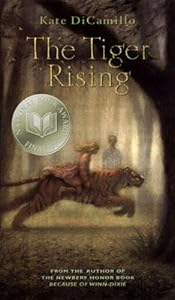
Mentor Text Linky {Language Arts} The Tiger Rising


I'm linking up with Amanda and Stacia for their Mentor Text Linky Party!  This week, the subject is language arts and I'm going to share one of my favorite favorite favorite books with you: The Tiger Rising!


If you haven't read it, The Tiger Rising is about a boy named Rob who finds a tiger in the woods behind the motel he calls home.  He then meets a girl who is new to town (Sistine) and feels compelled to tell her about the tiger.  She tries to convince him to let the tiger go and, as luck would have it, the keys to the cage are presented to Rob.  I won't ruin the end for you, but your students will have some very lively discussion about what Rob and Sistine should do and about how the author chooses to end the book.
I use this text to introduce symbolism to my students.  There are pretty heavy, and somewhat obvious, symbols used throughout the book.  My students love talking about "the cage" and Rob's suitcase.  In the text, the cage is an important image and students can discuss the characters who feel trapped in the story.  Rob's suitcase is an imaginary place where keeps his feelings and "not-thoughts" tucked away.  

Here is an organizer I used with my class to keep track of the symbols that popped up throughout the novel.  Click HERE to grab it!

 There's SO much you can do with this book.  It's great for inference, character analysis, simile and personification!  I'm working on editing the reading response sheets I used with my class and compiling all of the mini lessons we did so I can share them.  Hopefully I'll be done before I'm ready to read it to my next class!

Update: I'm done!  I just finished compiling the unit and I'm SO proud of it! The Tiger Rising Unit and Novel Study on TpT


This is an 83 page product filled with resources to help you teach the novel The Tiger Rising.


Included in The Tiger Rising Novel Study, you will find:
- Chapter by chapter notes for the teacher about the characters, symbolism, examples of literary technique and possible extension activities
- Comprehension questions for each chapter. 
- Quoting text mini lessons and text based evidence transitional phrases
- Vocabulary for each chapter, a graphic organizer for finding word meaning in context and a sheet for writing definitions and meaningful sentences.  I've also included cute, themed word cards for your to use on your word wall!
- Symbolism poster and graphic organizer
- Compare/Contrast mini lesson support; many of the prompts require the students to compare and contrast, so I've included posters for this topic.
- Reading Response Questions: these questions are more indepth and promote higher order thinking than basic comprehension questions.  There are 18 pages of questions with space for student responses.
-Character analysis graphic organizers: one organizer for each of the main and supporting characters in the text.  Students will use the character's words and deeds to support a trait chosen.
-Figurative language mini lesson resources to help you teach author's craft
- Fact and opinion sort 


Have you read The Tiger Rising with your class?  What did they think?

Thursday, April 4, 2013

Teaching Students to Question

Last week, I blogged about starting The One and Only Ivan by Katherine Applegate with my reading group.  Well, yesterday was the big day!  My kids were really impressed by the size of the book and the fact that it has a hard cover (LOL!).

After introducing the book, I briefly revisited "thick" and "thin" questions.  We've written "thick" and "thin" questions together as part of our read alouds, but this was the first time I was working with this group of readers on questioning.  Click HERE to download posters!


I told the group that they would be responsible for writing the questions we would discuss after reading.  I assigned the chapters "hello" though "the littlest big top on earth," which is about ten pages but with a lot of white space and some images.  As they read, I kept the "thick" question starters up on the SMARTboard to help them out.  They had the option of recording their questions on a sheet I made, or on their stickies.

Sounds good, right? 

It was disaster.

Not a complete disaster though.  One of my students, C, did a FANTASTIC job writing thought provoking questions to ask the group.  He was awesome.

Why does he compare himself to humans?
What does he tell us about himself and how he feels?
Where does he live?
Why does he live there?
Who are Stella and Bob?
 The other three students really struggled.  It was painful.  Even with the question starters, they weren't able to piece together questions that even made sense.  I started conferencing with one of my students and I could see that the mini lesson just wasn't enough, but I was kind of baffled as to why???

During my crazy long commute home, I kept thinking about how this group could not put a question together.  I kept coming back to two things:  first, culturally, many of my students are told to come to school, be quiet and listen to the teacher.  Therefore, they are not used to being the questioner.  Second, the task was just too broad.  Even though the text was short, it would require my readers to take a huge risk to write a question worthy of good conversation.  Since there isn't too much I could do about the first thing, I did think I could do a better job with the task, so I scrapped my plans and decided to meet with this group again this morning.

This time, I gave C a writing response while I worked with the other students on QAR.

Right There - Who is Stella? 
Think and Search - What is on the domain walls?
In My Head - Why is Ivan never angry?  Who is the elephant on the cover?


I selected just one page to text to read with them.  As we read, I modeled writing Right There Questions for a few sentences.   
"My domain is at the end of one ring."  Where is Ivan's domain? 
"Stella is an elephant."  Who is Stella? 

Quickly, I saw my readers more willing to ask questions, even if they were the "thin" questions.  We moved on to writing Think And Search Questions, first together, then independently.  Finally, we tried writing thicker, In My Head questions.  My readers still needed assistance, but were more willing to try.  Rome wasn't built in a day, right?

Coincidentally, one of the questions my readers posed was the same question I asked C to write about!  
A silver back uses anger to maintain order and warn his troop of danger. Anger is for protection.  But Ivan don't go no one to protect.

Update: I just created a reading response booklet to use with The One and Only Ivan.  It contains questions for most chapters of the book.  Check it out on TpT:


Tell me, how do you teach questioning?

Tuesday, March 26, 2013

Tried It Tuesday!

I'm linking up with Fourth Grade Flipper for Tried It Tuesday!


Since we are in the midst of test prep, I thought I'd sharing a testing strategy that I've been working on with my class: justification.  Everything about multiple choice work has been about justifying answer choices and reasons for eliminating other choices.  Although I am definitely NOT a fan of the testing mania, I want to empower my students with as many strategies as possible so that they can be successful.  They are old enough to know and understand how tests are constructed, so I want them to be able to use the same vocabulary {process of elimination, distractor, text evidence} we do when we discuss tests.

I feel like I'm constantly apologizing for my sloppiness, and today is no exception!  Please excuse my scribbles on the SMARTboard!

What you see above is Grade 5 Daily Common Core Reading Practice Weeks 1-5 by Literacy and Math Ideas on TpT.  This product has short reading passages and Common Core aligned multiple choice questions.  If you are looking for some quick practice (as in less than 15 minutes) you may want to check this out.  I use it between read aloud and word study.  You can see the justification that my students gave for each answer choice {first sentence, no proof, not mentioned}.

On this student's work, you can see lots of great thinking next to the answer choices {not in the 1800s, doesn't answer the question, not important, doesn't say Europe}.  Rather than racing through the practice, this student did a great job showing all of this thinking, making it easier for me to figure out why students make mistakes!

 This was not an overnight process!  The first time I used the word "justify" with my class, we were working on finding word meaning in context.  The justification wasn't great and a lot of times, it was really off the mark.  You might notice while trying to determine the meaning of "bauble" this student wrote "not a gift" and "not a present" as reasons why he crossed out those choices.  Those aren't great reasons, because the bauble was a gift.  In this case, I wanted to see great reasoning for why jewelry is the BEST choice. 

Over the past few weeks, their reasoning has improved.  From time to time, I'll come across some lame justifications, and I'll need to remind my kids that they shouldn't write the same thing for all three incorrect choices, but overall, I'm really pleased with the thoughts I read!


Tell me, what are you trying to get your students ready for their tests?

Wednesday, March 20, 2013

Workshop Wednesday Link Up!


I'm so excited to link up with Jivey for Workshop Wednesday!  This week's topic is a big one: graphic organizers!  I use graphic organizers ALL the time in my read alouds to model  the great thinking kids should do in their independent reading.

Right now, I am focused on CCSS 5.5 (explain how a series of chapters, scenes, or stanzas fits together to provide the overall structure of a particular story, drama, or poem).  On our most recent practice test, this was a huge area of concern.  Can I be honest and say that I wasn't even really sure what they kids needed to do demonstrate mastery of this standard until I saw some of the prompts on this test?  The one that stands out to me was something like, "The first paragraph of this passage describes the setting.  Why did the author include the second paragraph?"  Once I saw that question, I realized that the students needed to be able to determine the purpose of different parts of a story.  They would need to explain WHY the author included different chapters and parts of a passage.

Keeping this goal in mind, I created this little organizer.

Click the image to download a pdf version.

I used this graphic organizer to model my thinking as we read Fly Away Home by Eve Bunting.  Please don't judge my chart!  I didn't really think I'd be sharing it!

Sloppiness aside, you can see from the chart that we looked at the first page and summarized.  Then we looked at the next page and summarized.  To fill in the connection, we asked why are these pages together?  Why did the author include them?  What's the connection?  We did the same for the next few pages and used that information to notice the author's emphasis on consequences for people who get caught in the airport.  After modeling my thinking about the pages and their purpose, I sent my kiddos off to do the same in their independent reading.

Right now, my guided reading group (The Tale of Despereaux) is working on the same chart, but instead of working with pages, they are working with the four books within the book.

Tell me, how do you use graphic organizers in your classroom?

Friday, March 1, 2013

Literature Circles

I'm pretty sure that literature circles are my favorite part of my classroom right now!  This is my first year having literature circles, well circle,  as a part of my balanced literacy program.  My group formed in January and they are on their third book right now. 

Here is a quick glimpse into literature circles in my room:

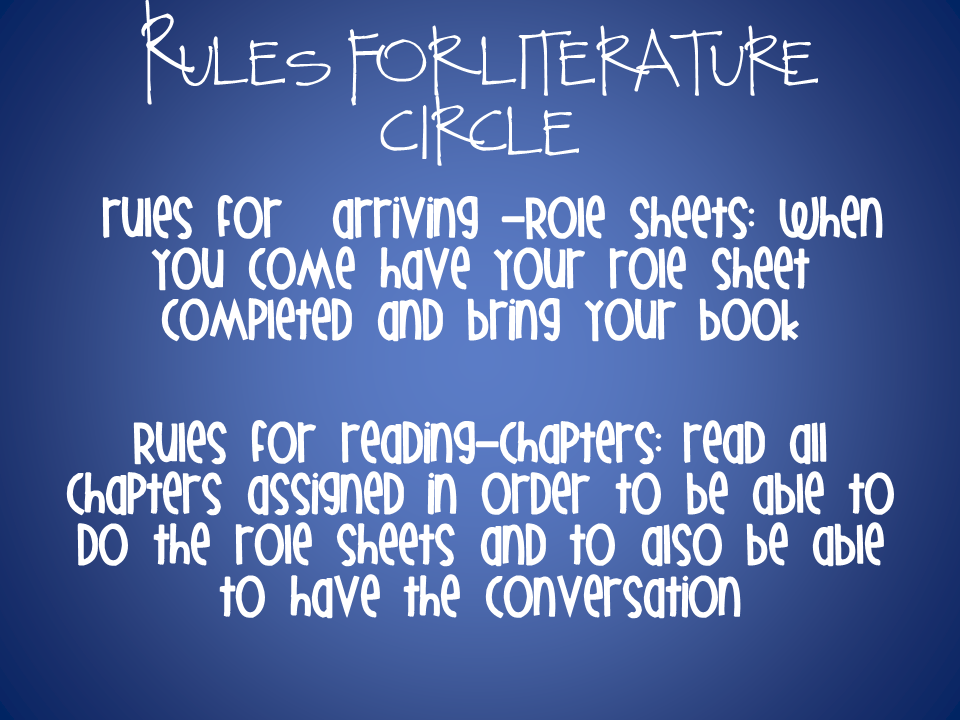
The literature circle group keeps their folder amongst my mess.  They have one folder with a sign in sheet, a list of expectations and a calendar.  Here is a look at the list of expectations that they created:


 I've actually just taken away their role sheets.  Now they get a few stickies and I expect all of the students to come to literature circles prepared with questions, connections and quotes to discuss.


The group uses the calendar to set their homework and decide when to meet next.  I generally have a bit of input about when they should meet.  Lately, we've been favoring Mondays and Thursdays.

Every once in  awhile, I pop into their meetings to listen to their conversations.  When I do, I usually scribble take notes as a transcript.

After they are done, I talk to them about what I noticed about their conversations and usually do a mini lesson about social skills.

At other times, I do a bit of assessing by asking the students to reflect on their experience in literature circles on that day.  When I notice their conversations are beginning to slow down, I'll drop off a sheet for them to complete before they adjourn for the day.

This response asked the students to select the most important question asked during their circle.  All students responded with a very similar idea and elaborated on why the question was so important.  A quick and easy way to make sure the students are on task and on target in their reading and in their conversations!

So tell me, do you do literature circles in your classroom?


Tuesday, February 26, 2013

The Lorax and Analyzing Images

We are taking a pause in our study of Lewis and Clark to get ready for Read Across America Day!  In the upper grades, we celebrate by sending our students to read to the littler kids.  They will practice all week to read the books they've chosen fluently.  It's so cute!


We started sharing The Lorax by Dr.Seuss today.  We actually only read a very small part of the text this morning because we focused on analyzing imagesI made this chart for recording their observations about what they saw on the cover and what they saw on the Street of the Lifted Lorax.  Those weird things around "The Lorax" are supposed to be truffula trees.  LOL!  I tried!


This was a great opportunity to get the students to think from the perspective of the author and illustrator and really dig deep into how images impact a text (Hello, Common Core!).  And may I confess that while prepping for this lesson, it was the first time I really REALLY spent time looking at the pictures. For instance, I never really noticed the connection between the cover and the second page "if you look deep enough you can still see, today, where the Lorax once stood just as long as it could." 

Some key questions:
* What feeling do you get by looking at the cover?
* How does the Street of the Lifted Lorax compare to the cover image?
* What do you think the author wants you to look at on this page?
* How does the image relate to the words on the page? {This was a differentiated question to allow my newest English speakers the chance to participate.}
* Who is telling this story so far? How can you tell?  {The narration is in third person until the Once-Ler begins telling his tale.}

We only read the first few pages! I don't usually stop so frequently for questioning, but I thought it was important to discuss each new image.
This is our chart from the end of our (mini) read aloud.  I'm really happy with the beginning of our analysis!  I was able to introduce my kids to the words dreary and desolate and the kids wrote some great responses about the mood along the Street of the Lifted Lorax.  By the end of the week, we will add onto our chart by analyzing images of the Once-Ler's arrival and images of the Once-Ler's factory.

Of course, I don't think you can read this book without discussing the impact of the Once-Ler's actions on the environment and questioning whether he has a right to "biggering and biggering" his company, so we will do a bit of on demand writing to tackle these topics.  These conversations will lead us to understanding Dr.Seuss's point of view, something my kids are still struggling to identify.

I'm also planning to work with a small group to complete a cause and effect organizer that I made....click below to grab your own copy :-)


So tell me: what do you have planned for Read Across America Week?